


Olby
Connecting Brazilian tech talent with international career opportunities through a scalable hiring platform.
Overview
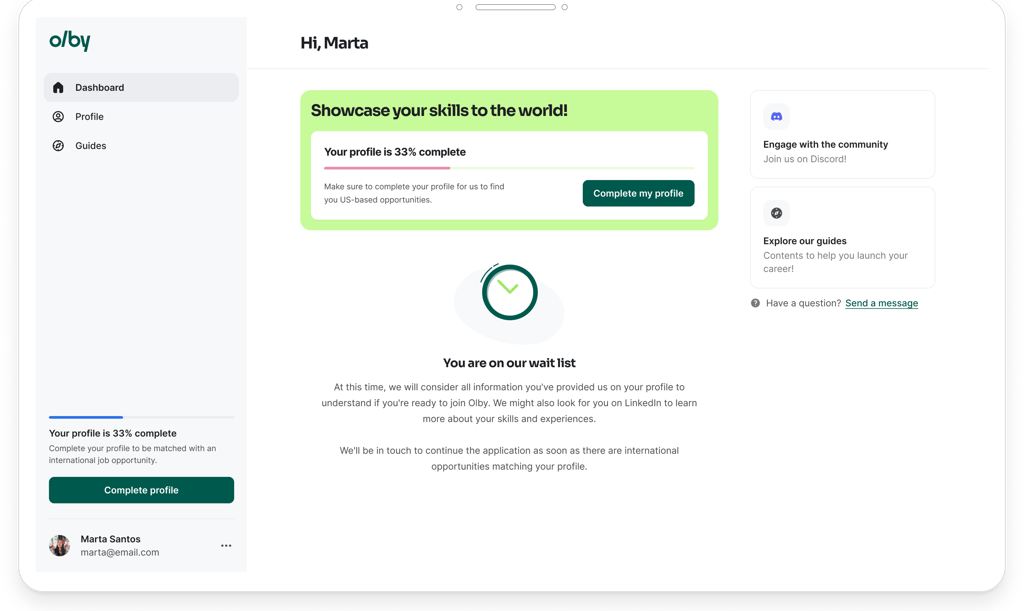
Olby connects Brazilian tech professionals with international companies through a platform designed to support global hiring and talent discovery.
Role
The product combined candidate-facing experiences with operational tools used internally to manage opportunities, talent pipelines, and company relationships. As the platform expanded, improving onboarding and profile completion became essential to creating more efficient matching experiences and increasing user activation.
Product Designer
I worked with a team of four designers, contributing to both candidate-facing and operational experiences across the platform. It included onboarding flows, internal management tools, user validation, and responsive interfaces for desktop and mobile.
The Problem
The platform relied on detailed candidate profiles to generate effective matches between Brazilian talent and international opportunities.
However, onboarding required users to manually enter large amounts of professional information, creating friction in a time-sensitive part of the experience.
The slower the profile completion process became, the harder it was to quickly connect talent with relevant opportunities while maintaining data accuracy and matching quality.
Existing Registration Flow
The initial registration flow already collected high-level preference data needed to personalize the platform experience, including preferred roles, years of experience, primary technical skills, English proficiency, location, and LinkedIn profile URL.
Because this stage remained relatively lightweight and completion rates were healthy, the registration experience itself was not identified as the primary source of friction.
Beyond Registration
During discovery, we identified that the largest source of friction was not the initial registration process, but the amount of manual effort required to complete the professional profile afterward.
After completing registration, users were directed to a waiting list experience while the platform prepared future matching opportunities.
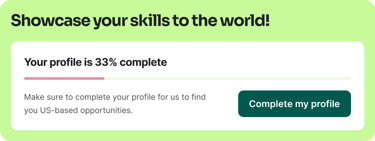
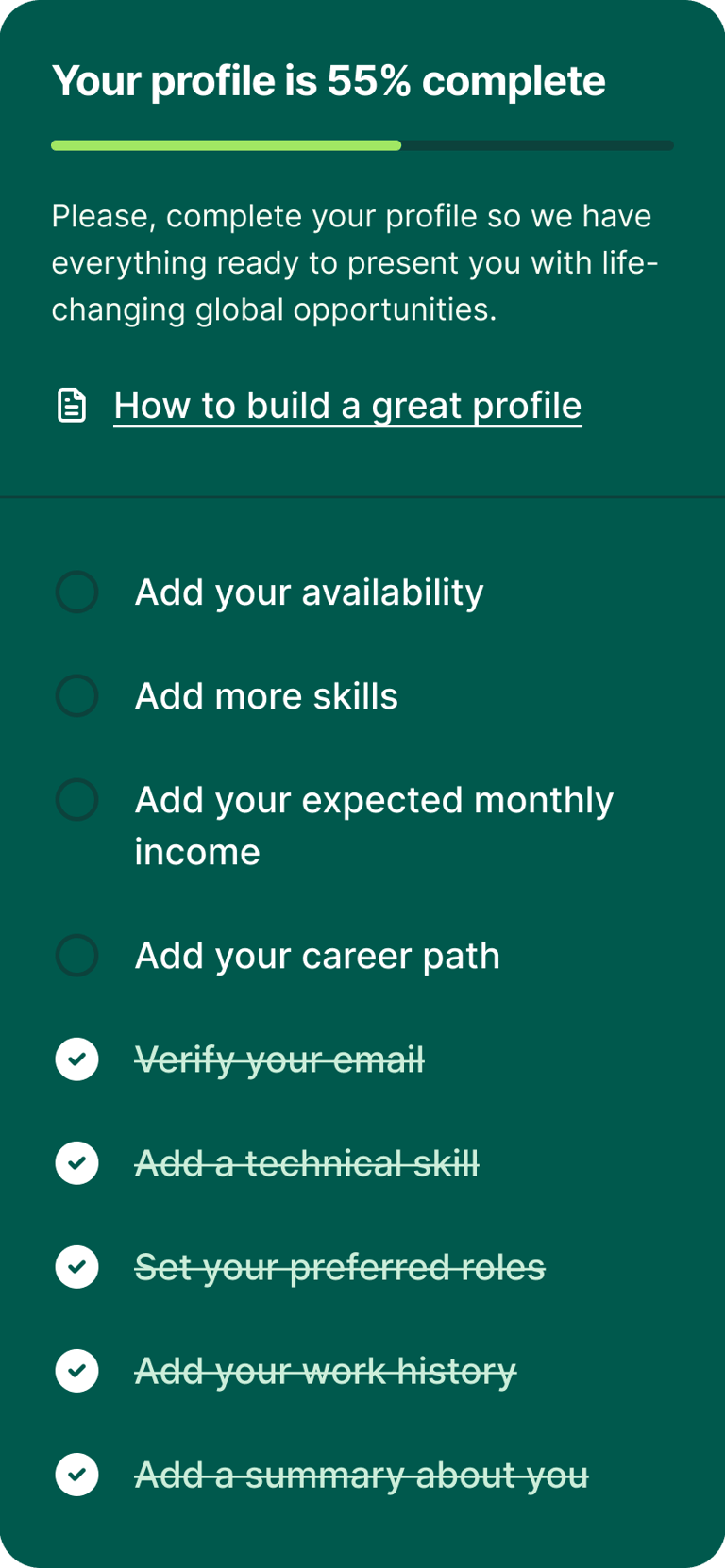
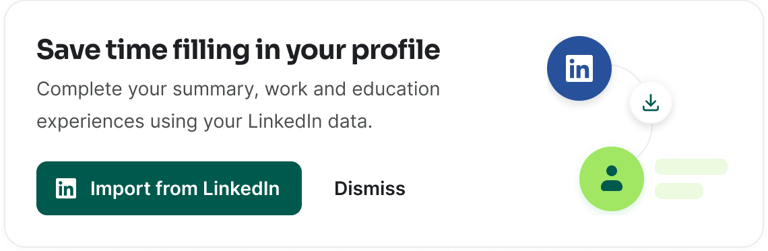
At this stage, profile completion became a critical activation step. A banner encouraged users to continue onboarding by completing their professional profile
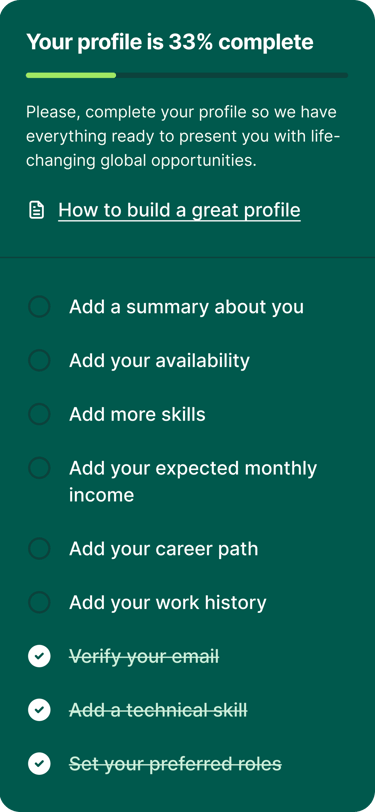
Once users entered the profile completion flow
they were presented with a checklist of required information designed to improve matching quality and candidate discoverability.
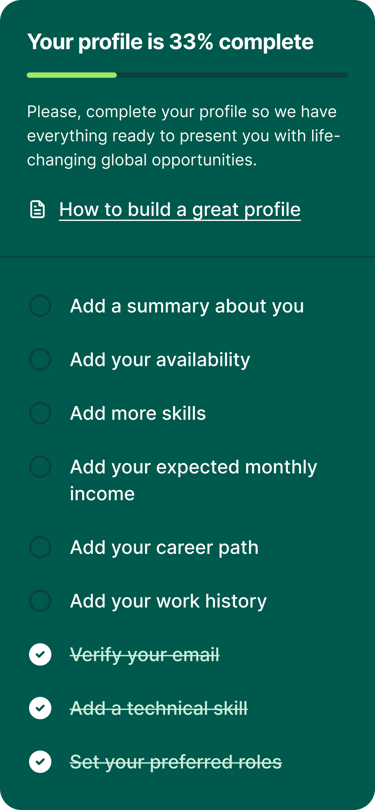
Reducing Manual Profile Completion
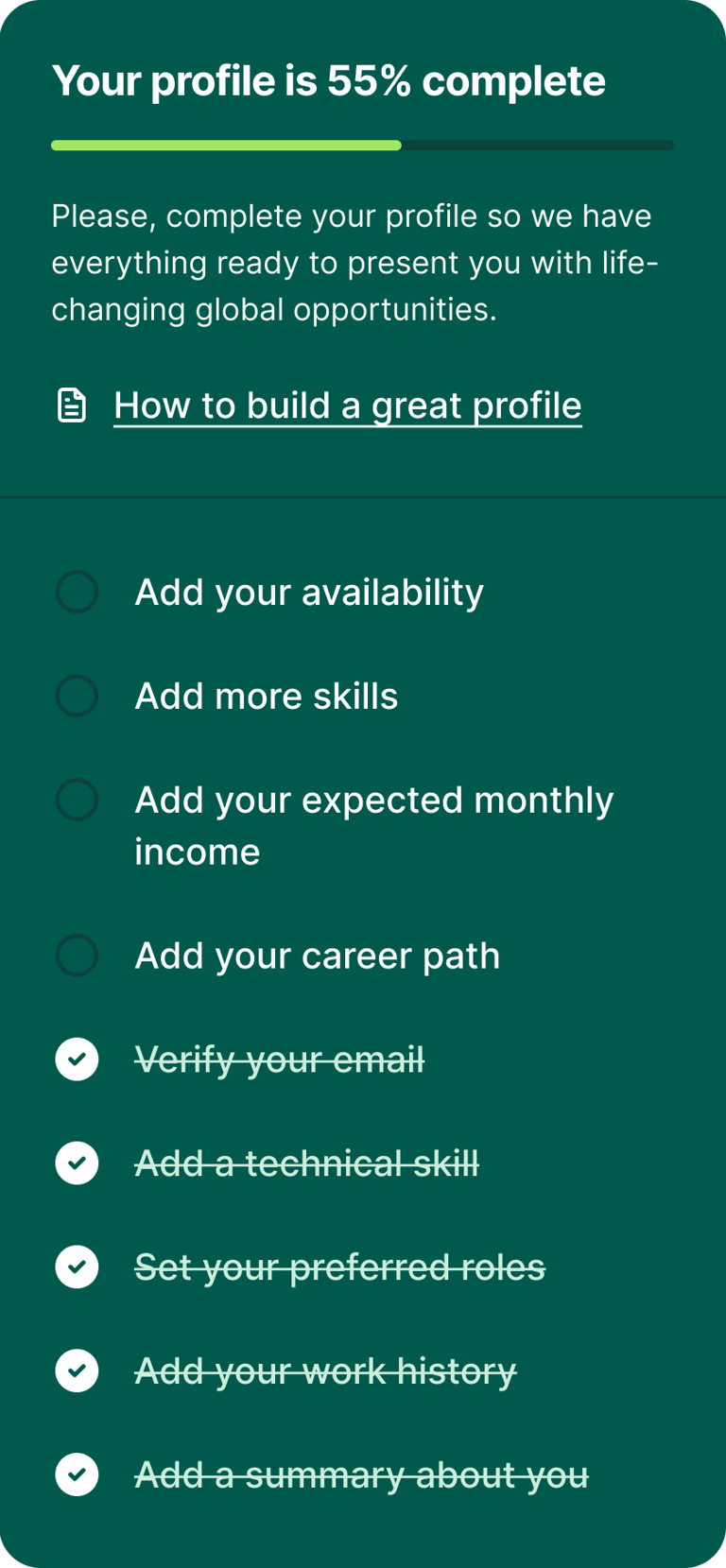
Tthe largest source of friction was concentrated in two specific profile requirements: Professional summary and Work history.
Theese sections required users to manually recreate detailed professional information that often already existed on their LinkedIn profiles.
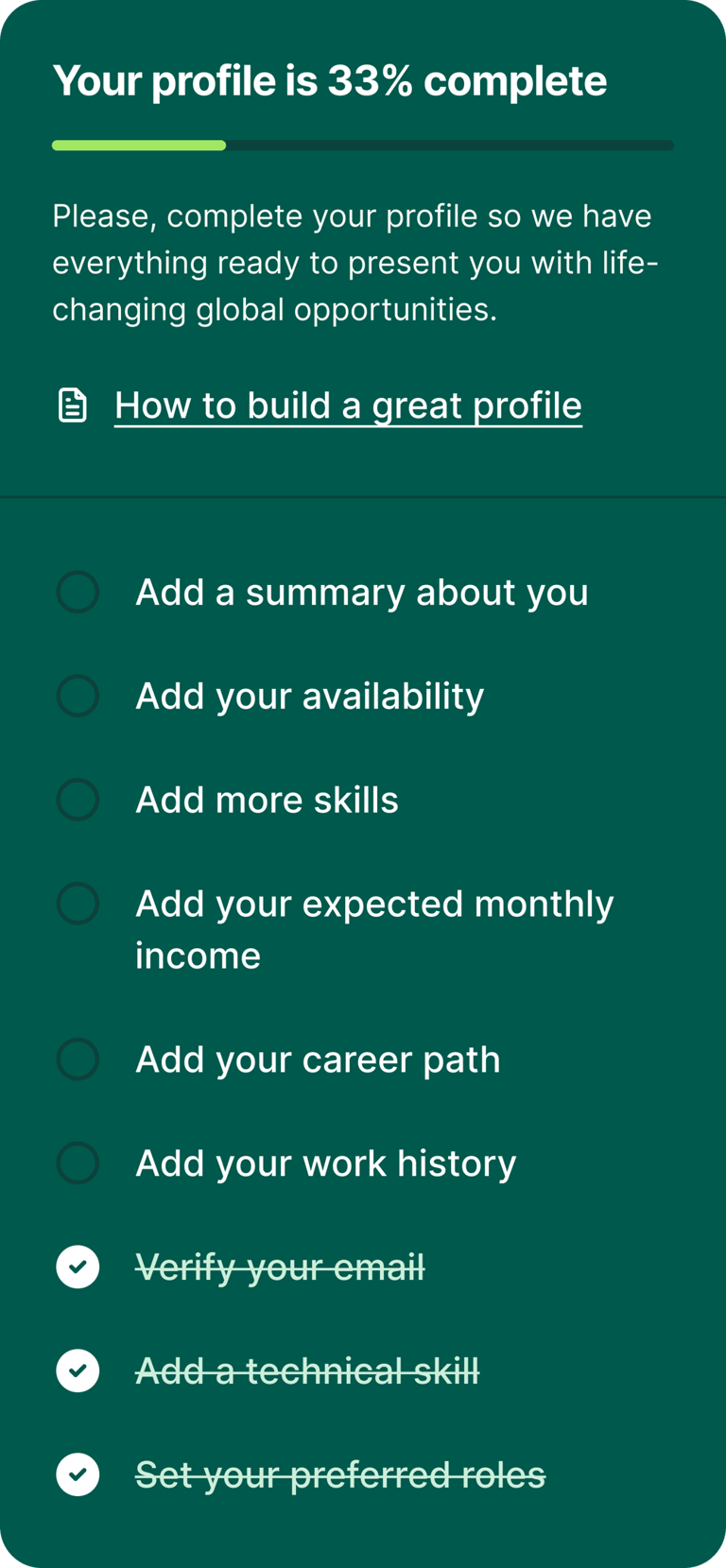
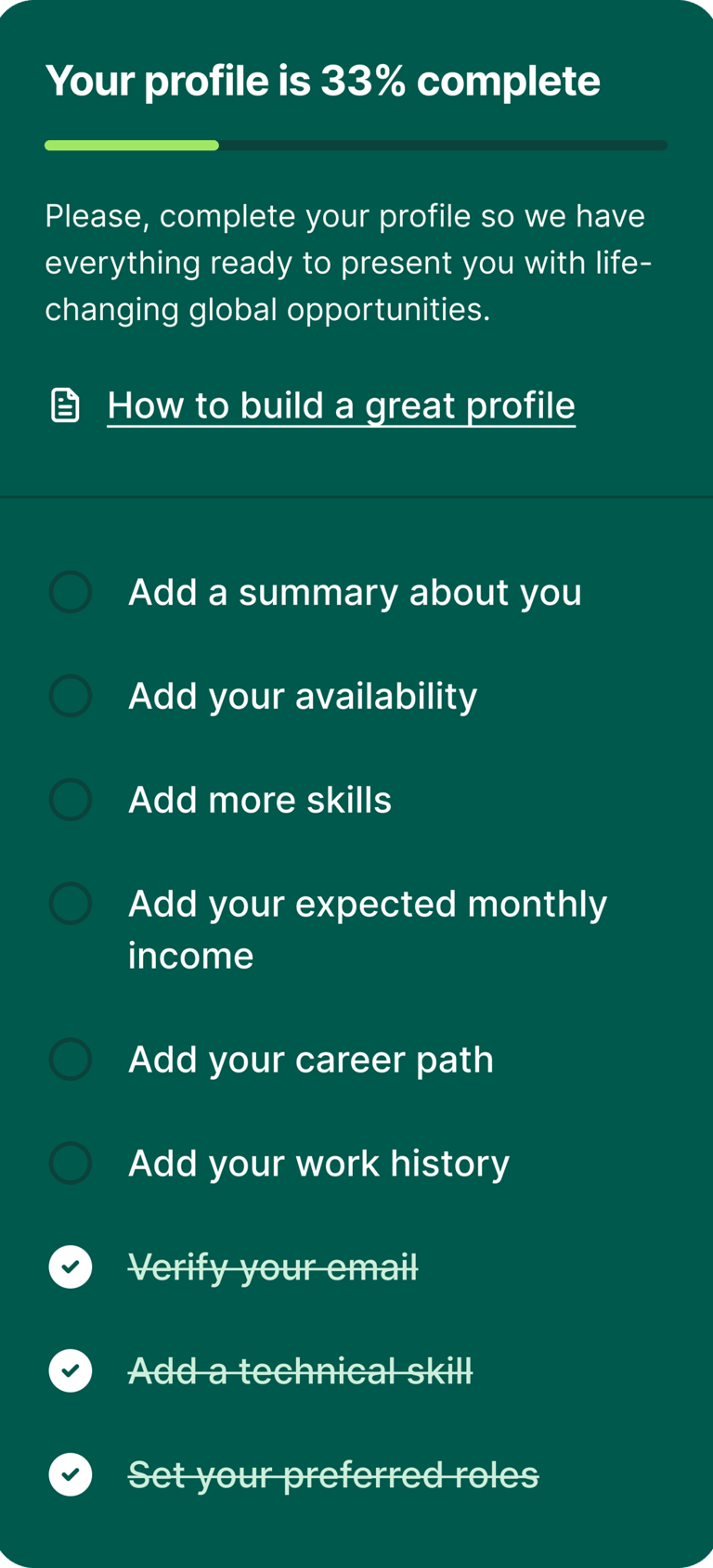
By importing LinkedIn information into the platform, users could automatically complete the heaviest sections and immediately increase their profile completion progress from approximately 33% to 55%.
Designing the LinkedIn Import Experience
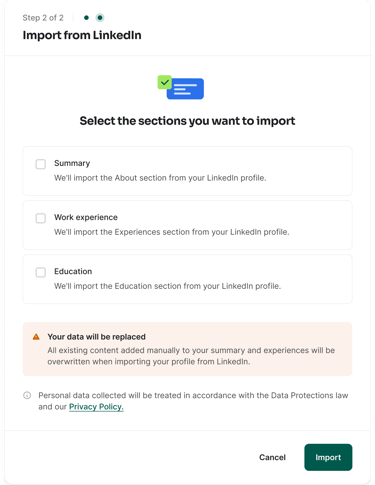
I designed the LinkedIn import flow as a guided two-step experience focused on transparency, preparation, and user control.
STEP 1
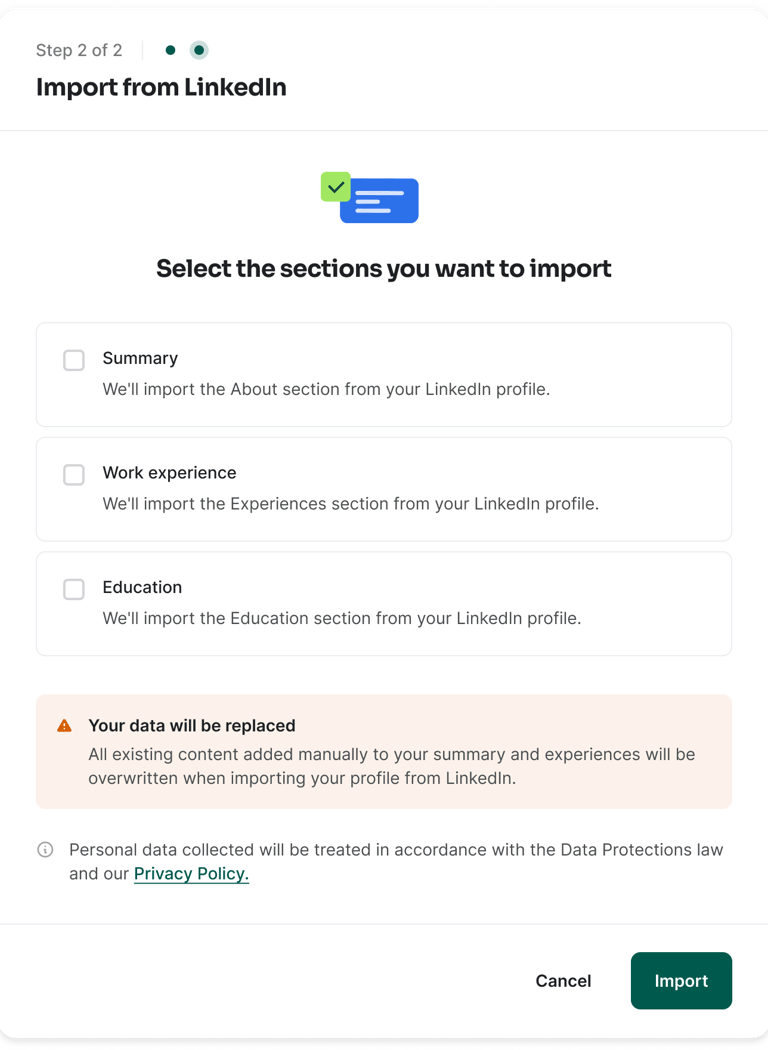
The second step focused on flexibility and user ownership over imported content.
Instead of forcing a full profile import, users could choose which sections they wanted to bring into the platform.
While education was not considered essential for profile completion or matching quality, offering it as an optional import created a more complete and personalized experience for users who wanted it.
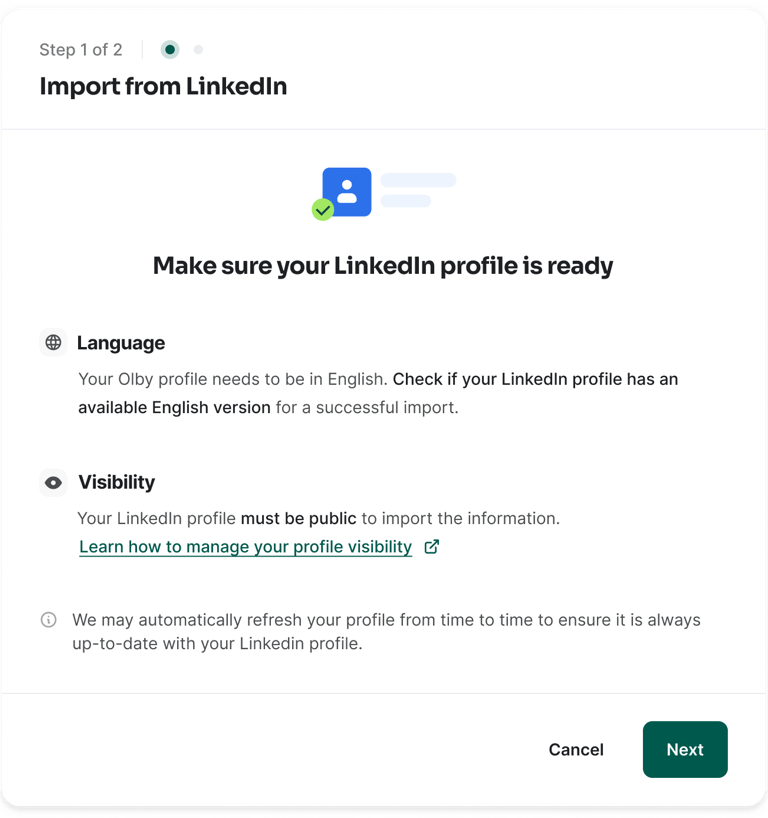
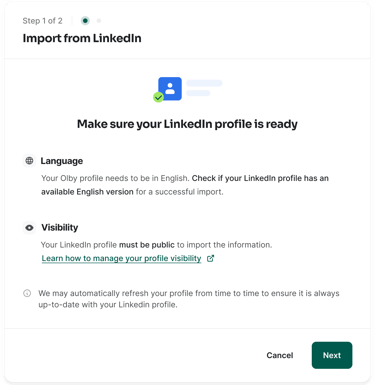
The first step focused on creating awareness and increasing the likelihood of a successful import.
We also introduced transparency around how imported data would behave over time by informing users that their profiles could occasionally refresh automatically to keep information aligned with LinkedIn updates.
This step helped establish trust before requesting any action from the user.
STEP 2

Import Experience
Results
90%
in candidate discoverability
Effort reduction
by automatically importing high-friction profile sections
Acceleration
Increase in profile fulfillment
High quality
of matchings
1. Reducing effort improves activation
Users were far more likely to continue onboarding when repetitive manual tasks were reduced through automation.
2. Transparency build
Clear communication around visibility, synchronization, and overwritten content helped users feel confident importing their LinkedIn profiles.
3. Automation still needs flexibility
Allowing users to choose what to import created a better balance between efficiency and user control.
Key Learnings 💡
Contact
Let's chat!
renatadutrams@gmail.com
+55 31 98892-3431
© 2025. All rights reserved.